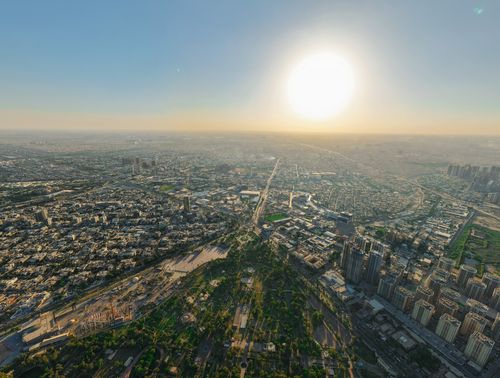
How urban heat islands turn Indian metros into mini-ovens after sunset — the concrete and asphalt story
• Urban heat islands in Indian metros, caused by concrete and asphalt, raise nighttime temperatures, impacting health and energy consumption.
• Cities like Delhi and Mumbai face intensified effects, necessitating strategies like green infrastructure and reflective materials.
• Addressing this issue can create more sustainable and livable urban environments, reducing health risks and energy demands.
Why It's Important?
The composition of urban landscapes, dominated by buildings, roads, and pavements, plays a crucial role. Concrete and asphalt have high thermal mass, meaning they can store large amounts of heat. During the day, these surfaces soak up solar radiation, causing their temperatures to rise dramatically. Unlike natural surfaces such as vegetation and soil, which dissipate heat through evapotranspiration, urban materials trap heat, leading to a considerable temperature difference.
Related News