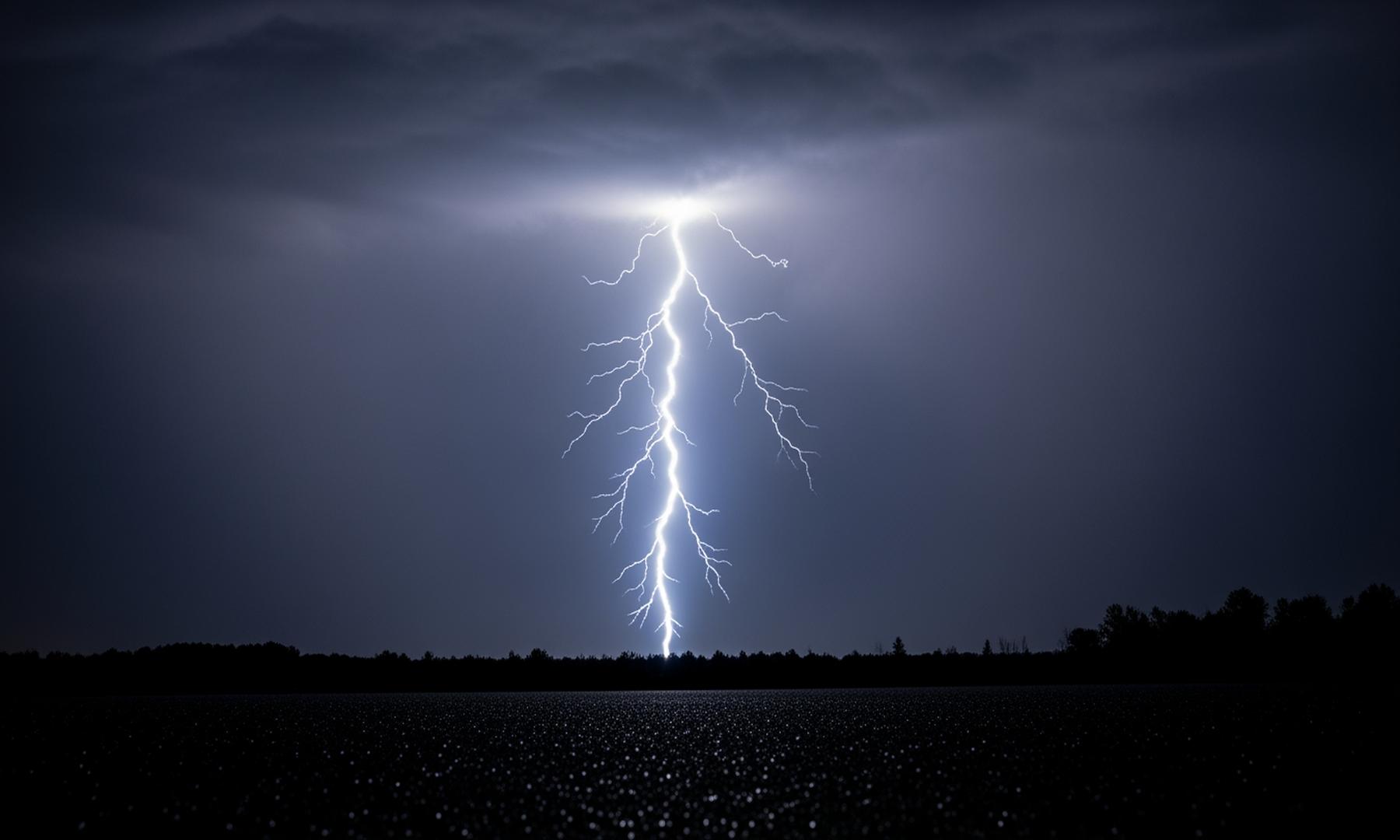
Cloud-to-Ground Lightning: Understanding the Phenomenon
• Cloud-to-ground lightning is a common meteorological phenomenon where electrical discharges occur between a cloud and the Earth's surface.
• This type of lightning is characterized by its bright flashes and loud thunder, often associated with severe weather conditions such as thunderstorms.
Why It's Important?
Cloud-to-ground lightning is a frequent and potentially hazardous weather event requiring attention and respect. It happens when a negatively charged area in a storm cloud connects with a positively charged area on the ground. This connection forms a channel through which an electrical current flows, creating a visible lightning strike. The rapid heating of the air along this channel results in the explosive sound known as thunder. The science behind this involves complex interactions of air currents, ice crystals, and electrical charges within storm clouds.
Related News