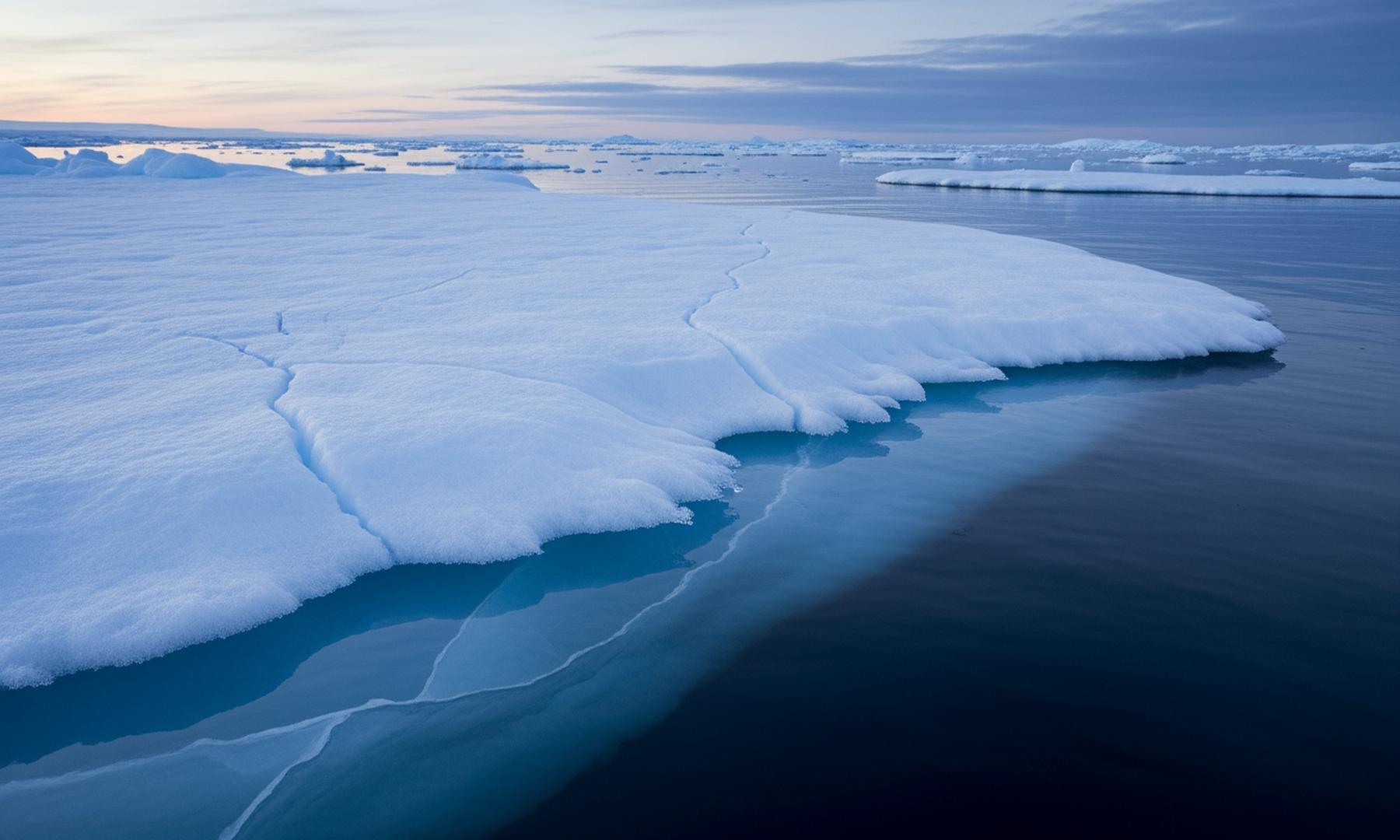
Antarctic Sea Ice: Growth and Sudden Decline Explained
• Stanford University study explains the dramatic fluctuations in Antarctic sea ice extent.
• Rapid release of accumulated ocean heat, previously trapped by a less salty surface layer, is identified as a key factor in the recent sea ice decline.
• Enhanced storm activity, potentially linked to climate change, contributes to increased upwelling and accelerated ice melt.
Antarctic sea ice decline linked to ocean heat
A recent Stanford University study elucidates the complex dynamics of Antarctic sea ice, which exhibited expansion from the 1970s to 2015 before undergoing a sharp decline starting in 2016. The research attributes this decline primarily to the release of accumulated ocean heat. Increased precipitation around Antarctica formed a less salty, lower-density surface layer that trapped heat in the deeper ocean. Subsequently, heightened storm activity, potentially linked to climate change, disrupted this stratification, leading to increased upwelling of warmer water and accelerated ice melt.
Related News