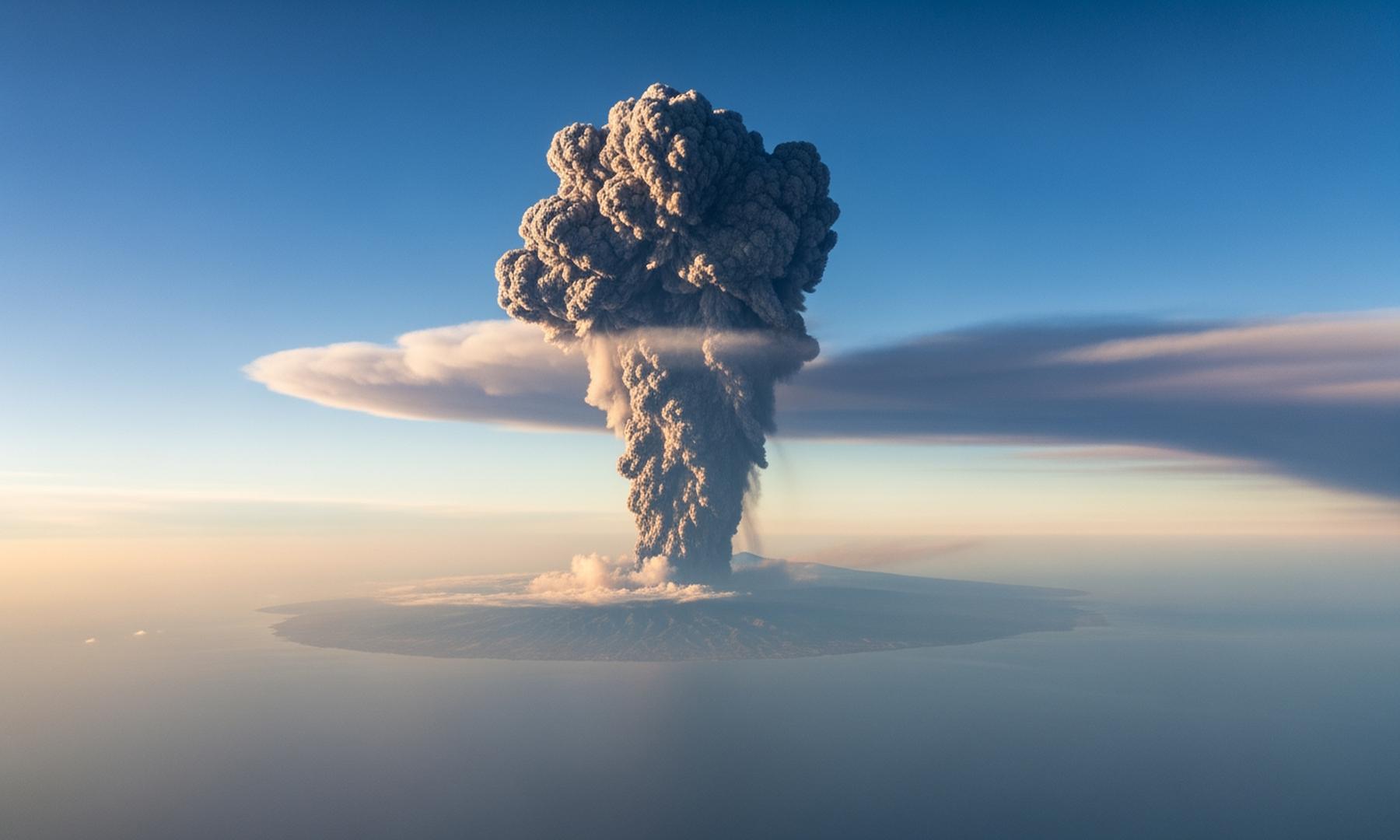
Tonga's Volcanic Eruption Alters Stratosphere, Cooling Effects Persist
• The Hunga Tonga-Hunga Ha'apai eruption injected a record amount of water vapor into the stratosphere, nearly four times that of the Mount Pinatubo eruption.
• Unlike typical eruptions that warm the stratosphere, the Tonga eruption cooled it by 0.5 to 1 degree Celsius due to the water vapor releasing heat to space.
• The eruption caused a significant tsunami with waves reaching over 50 feet near Tonga, affecting global sea levels.
Volcanic eruption injected unprecedented water vapor into stratosphere
The Hunga Tonga-Hunga Ha'apai volcanic eruption in 2022 had a profound impact on the Earth's stratosphere, primarily due to the unprecedented amount of water vapor it injected into the atmosphere. NASA's Jet Propulsion Laboratory reported that approximately 146 teragrams of water vapor were released, nearly four times the amount from the Mount Pinatubo eruption in 1991. The eruption's plume soared to a record height of 35.4 miles (57 kilometers), carrying vast quantities of water vapor that interacted uniquely with the stratosphere.
Related News