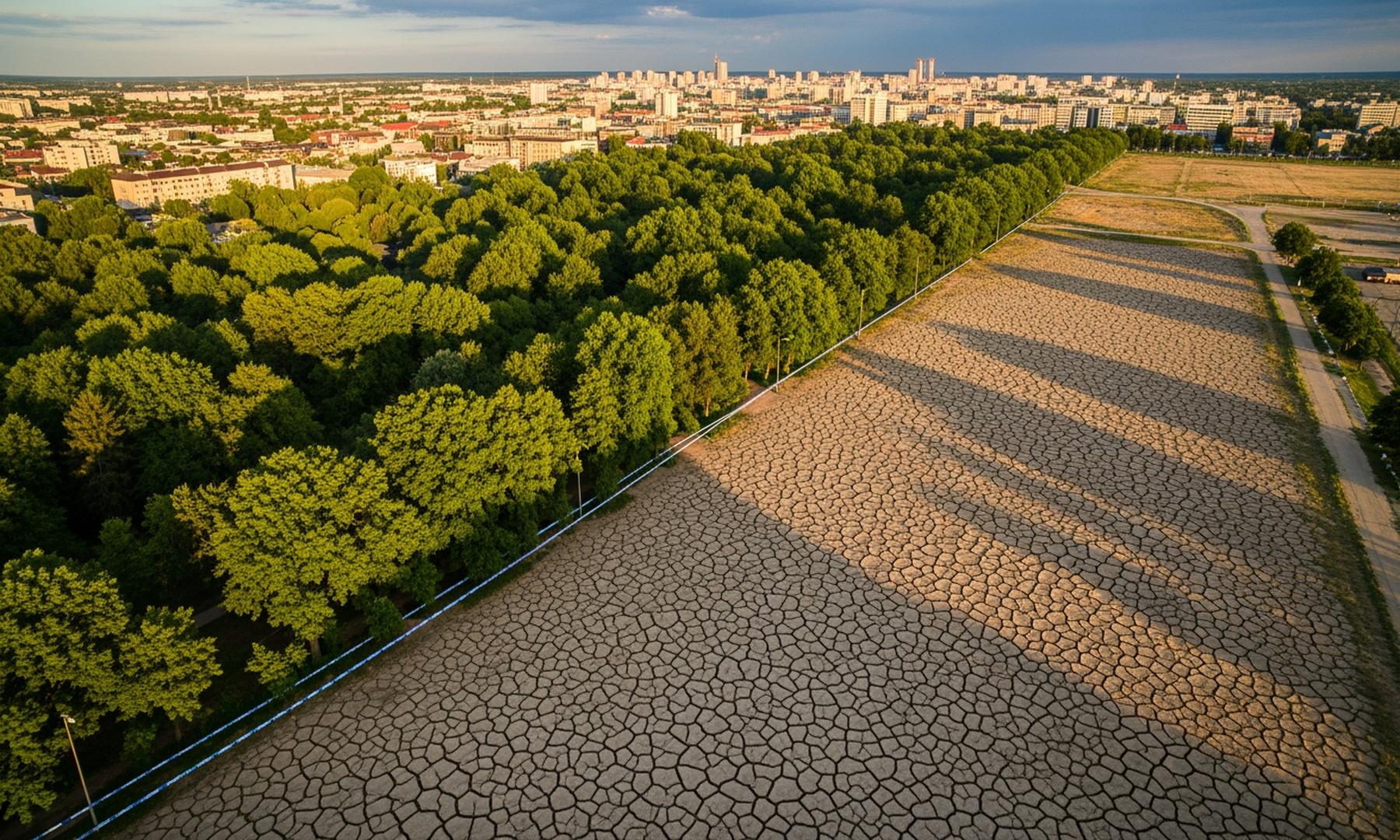
Urban Vegetation Inequality in U.S. Cities Amid Climate Extremes
• Study reveals increasing urban vegetation inequality (UVI) in southern California and Texas due to climate extremes.
• Pacific Northwest, East Coast, and Great Lakes Region cities show a decline in UVI, indicating more equitable green space distribution.
• Socioeconomic factors and climate variability significantly impact UVI, highlighting the need for equitable urban planning policies.
Disparities in urban vegetation across U.S. cities
A recent study published in *Nature* highlights the growing disparities in urban vegetation across major U.S. cities, particularly in the face of increasing climate extremes. Analyzing 245 cities, the research reveals that urban vegetation inequality (UVI) is rising in some regions while declining in others. The study utilizes the Vegetation Polarization Index (VPI) to measure these disparities, focusing on the differences in vegetation greenness between the wealthiest and poorest neighborhoods.
Related News